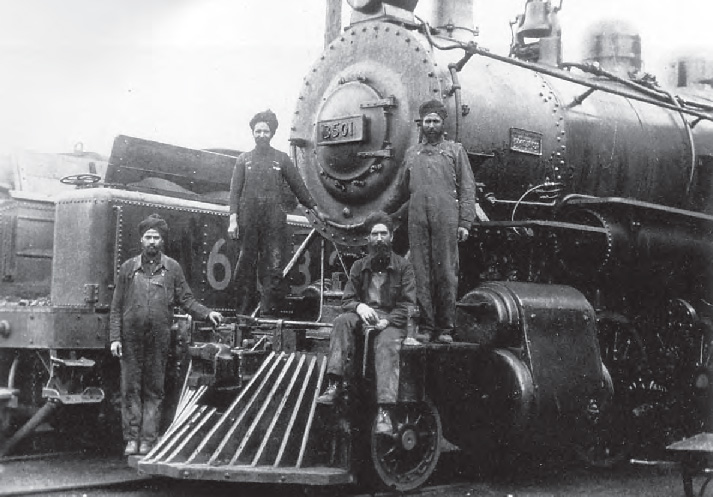
As the 20th century began, Canada wanted to attract immigrants to populate its vast spaces and to produce and consume goods. The government prized immigrants from Britain and tolerated them from the rest of Europe. But it did not want Asians as permanent residents, although they were needed as workers. The federal government passed laws to prevent the citizenship of Chinese and South Asians, and to prevent Asian women and wives from coming to Canada. In January 1912, Dr. Sundar Singh spoke to the Empire Club in Toronto. He challenged the law and prevailing attitudes against Sikhs.
The speech
The subject which I am to discuss today is of great importance to the [British] Empire … Some few years ago a few troops of the Sikhs passed through Canada on their way to the jubilee of the late Queen Victoria . . . These Sikhs went back home and they spoke of the vast prairies where they saw wheat growing the same as we grow wheat. The consequence was that a score of them came out in 1905, about forty of them came in that year and the next, and this went on till there was quite a strong body of them, about four thousand in all, engaged in agriculture; they were farmers in India, and of course they naturally took to farming when they came to this country.
They cannot bring their wives
They are British subjects; they have fought for the empire; many of these men have war medals; but, in spite of this fact, they are not allowed to have their families with them when they come to this country; in spite of their being British subjects, they are not allowed to have their wives here. People talk about these Oriental races, and the phrase is understood to include not only the Chinese and the Japanese, but the Sikhs as well, which is absurd. Letters giving inaccurate statements are appearing in the press all the time. I do not know why all this objection should be directed against the Sikhs, against that people, more than against any other Oriental people.
These people are here legally; they have satisfied every process of law; they have been here over five years; they have been good to their employers . . . their work is equal to that of other labourers; their quarters are better, and they are making more wages now; they have fitted into the situation here; they have made good.
Nobody stands up for them
In spite of this, there are these letters going through the papers, and there are attacks upon these men; although they are British subjects, nobody stands up for them. We appeal to you of the Empire Club, for we are only four thousand in number, to help us in this matter, and to see that justice is done to these subjects of our king.
We are subjects of the same empire; we have fought, we have sacrificed. We have fought for the empire, and we bear her medals; we have an interest in this country; we have bought property in British Columbia; we have our church and pay our pastor, and we mean to stay in this country. I understand that there is a society called the Home Reformation Society and that it says that it is better for a man to have a wife and family. To others you advance money to come here, and yet to us, British subjects, you refuse to let down the bars. All we are asking of you is justice and fair play, because the Sikhs have believed in fair play, and have believed all the time that they will get justice; that ultimately they will get justice from the British people.
A matter of justice
Many people have been telling me that it is useless my trying to bring this question before the Canadian people, but I am firmly persuaded that, if the question is properly brought before right-minded Canadians, that they will say that the same rights should be given to the Sikh people as are given to any other British subjects . . .
It is only a matter of justice. If this empire is to be and continue to be a great empire, as it is sure to be, then it must be founded on righteousness and justice; your laws cannot be one thing for one set and a different thing for the rest of us.
These Sikhs are quite alone; they do the roughest labour; they do not come into competition with other labour, and yet this is the treatment they receive. They are plainly told: “We do not want you to bring your wives in.” You cannot expect people to be moral, if you debar them from bringing in their wives and children. They can travel in Japan; they can travel in Europe; they can travel anywhere under the British flag, except here . . .
Now, if these men are allowed to land, why not their wives; why should they not be allowed to land too? That is what they do not understand …
We have a promise
We have the promise of Queen Victoria that all British subjects, no matter what race or creed they belong to, shall be treated alike. These promises have been confirmed by King Edward, and his Majesty King George the Fifth. When he was in India, he granted their full rights to the Hindu people. The Indian people are loyal British subjects. They are as loyal as anybody else. Why should there be such a difference in the treatment of these loyal people?
We appeal to you, gentlemen, to say that in any country, under any conditions, the treatment that the Sikhs are receiving is not fair. We appeal to your good sense and to your humanity to see that justice is done, that this thing is not continued, for it has been going on for quite a long time.
Source
The Empire Club of Canada Speeches 1911-1912 (Toronto, Canada: The Empire Club of Canada, 1913) pp. 112-116
Photo credit
Sikh Heritage Museum of Canada
More information
Sikh Heritage Museum of Canada
History of South Asians in Canada
Discover more from Great Canadian Speeches
Subscribe to get the latest posts sent to your email.

Leave a comment