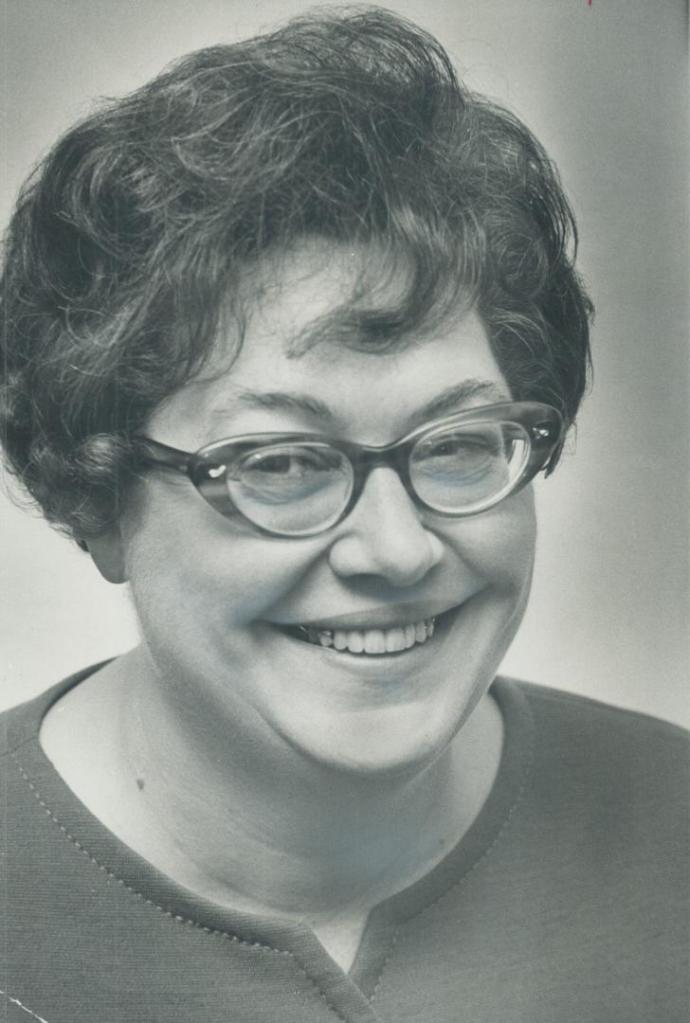
In 1963, Prime Minister Lester Pearson appointed Judy LaMarsh as minister of National Health and Welfare. She became only the second female federal cabinet minister in Canadian history. The first was Ellen Fairclough, who served in Diefenbaker governments between 1957 and 1963. LaMarsh was a lifelong Liberal activist who lived in Niagara Falls, Ontario. She was elected in 1960. As a minister, one of her main tasks was to devise the Canada Pension Plan (CPP), one of the country’s most significant social programs, and to guide its legislation through a minority parliament. LaMarsh could be a blunt and combative partisan, as indicated in her speech introducing a resolution on the CPP on 18 July 1963.
The speech
In rising today to introduce this resolution dealing with the Canada Pension Plan, I have the honour to speak to the implementation of one of the most important and far-reaching plans of action put forward by this or any other government. It is the natural next step in providing rounded welfare legislation for Canada. The whole record of the Liberal party in office has always been the introduction of legislation designed for the welfare of Canadians. Every major social advance made by parliament in this century has been made under a Liberal government. The legislation now before us, I am proud to say, will continue this tradition . . .
A partisan debate on pensions
The purpose of the Canada pension plan is to ensure, as was said in the speech from the throne, that all Canadians will have an opportunity to retire in security and with dignity . . . In my view, it is the government’s responsibility to propose a scheme. It is then the responsibility of all members of parliament as the people’s representatives to address themselves, without thought of partisan advantage —
Mr. [Heward] Grafftey: You have already been partisan.
Miss LaMarsh: . . . I make no apology for saying that the contributory pension plan to which this government has bound itself is inflexible only in its main purpose. The government will therefore welcome from any member any contribution or suggestion genuinely designed to improve the legislation, particularly as all other parties have already committed themselves to the principle and idea of contributory pensions . . .
Pension plan sparks interest
I think it is fair to say to all hon. Members that the government’s pension scheme, introduced now so quickly after the opening of this session of parliament, has excited throughout the body politic a great deal of interest. The fact that the plan is intended in its application to cover the widest possible range of citizens is itself sufficient cause for this interest.
Most economically advanced countries of the world have been moving toward this type of contributory wage related pension scheme for some time. The introduction in 1951 by the Liberal government of the day of the old age security program brought into effect in Canada, as all hon. members know, a flat rate scheme available to all at the age of 70 without a means test.
The present premier of Quebec had a lot to do with that plan. The present Secretary of State for External Aff airs had a lot more to do with it. It was a logical and particularly apt step for pensions in Canada at that time.
Unfortunately, however, in recent years some of the increases in payments made under this legislation have been based not upon increase in productivity, not upon progress of the economy, but only upon pure political expediency. This can no longer be countenanced . . .
Workers pay for their pensions
Some may criticize the type of plan which we propose under this resolution because it is one where the contributor, while active in the working population, pays to the government to create a debt from the state to him for his own retirement years. In effect, under this plan each generation will provide for the one which has preceded it in building Canada. No matter in what way pensions are provided, this is in fact their economic and social significance.
As I mentioned earlier, all the major parties have already committed themselves in principle to a wage related contributory pension scheme. What then, one may ask, are the alternatives in designing such a scheme?
Each party bas gone on record, reflecting the generally held feeling in this country, that such a scheme must be comprehensive so that it applies to the widest possible group of Canadians, and it must be as inexpensive as possible while returning an adequate pension to the individual. It must be truly portable or transferable so that an individual Canadian may carry his benefits with him anywhere be may choose to live and work . . .
Pay as you go pension plan
In a public plan the contributor may rely upon the fact that so long as his country exists the continuous inflow of contributions under such a plan will assure him of his benefit rights on his retirement. These were the arguments balanced by the government in coming to its conclusion that this plan should not be funded; thus the plan is framed on a pay as you go basis. The plan, including the costs of administration, will be no charge at all upon the general revenue . . .
How, then, to operate the comprehensive plan? Fortunately, Mr. Chairman, machinery already exists. As all hon. members are aware there is this machinery in the combined resources of the Department of National Revenue, my department and the unemployment insurance commission. It was decided, therefore, that this same machinery should, for simplicity, efficiency and cheapness, be utilized for registration at the time of the regular reissuing of unemployment insurance books and numbers by the unemployment insurance commission.
This will also have the advantage that this same numbering system may be used. Accordingly, since the next time for renumbering and reissuing the books has been scheduled for May 1964, it was concluded that the registration for contributors should be carried out at that time. This, Mr. Speaker, is the earliest practicable time, bearing in mind the tremendous administrative complexities of registering what is expected to be more than seven million contributors . . .
While this government is committed to this increased payment at the earliest possible date, it is committed not to pay it out of general revenue but from, a flow of contributions under the new contributory pension scheme. As I have said, it will be paid as quickly as possible, and it is hoped that will be early in 1964, within a year of this government taking office . . .
Pension based on lifetime earnings
This basis has been so designed that the average person will receive the same total payment from the age he starts his pension until his death, whichever starting age he chooses. His lifetime earnings will be the basis for the scale of the payments, and here is a most important feature. The average of these earnings will be adjusted by an index representing the general level of salaries and wages, so that he will be receiving benefits on the basis of the equivalent receipt of earnings in the year of his retirement.
The effect will be that the Canada pension plan will permanently provide a satisfactory standard of pension for those with earnings up to the average level. This [existing] $4,000 level will be adjusted with changes in the general level of wages and salaries, and will do away with the incentive to barter for the favour of the old people of this country just before an election . . .
Before concluding my brief remarks, Mr. Speaker, may I repeat what I said at the outset. The Liberal party and this government are pledged to a wage-related contributory scheme. Since taking office, we have been working steadily to explore the best type of scheme for Canada. We believe that the scheme now placed before parliament will commend itself to the house, but I should like once again to make it clear that we welcome comments of hon. members and any other interested persons which are aimed at producing the best possible plan for all retired Canadians.
I also hope that in the period before parliament gives final approval to this legislation interested members of the public, including, of course, representatives of employers and workers and of those who are concerned in the financing of private pension plans, will make it their business to assist in advising me. My officials and I will, as always, be glad to study their views . . .
Diefenbaker criticizes
Mr. Diefenbaker: Mr. Chairman I think there are some general remarks which I can make at the very beginning. The plan as enunciated is far from clear. There is a great deal of window dressing in it, hopes expressed for the future, and hopes as to what may be achieved 10 years from now.
Miss LaMarsh: You did not do anything in six years.
Mr. Diefenbaker: It was said suggestions would be welcome from the opposition. There was a plea for non-political and non-partisan consideration. The less said about that the better, on the basis of some of the remarks which were made. Looking at the plan in its entirety, one could almost compare it with an iceberg of which only the tip can be seen above the water.
Miss LaMarsh: May I ask the right hon. gentleman a question?
Mr. Diefenbaker: I am not going to have any of these interruptions. I sat quietly while the hon. lady spoke and I am asking for the same consideration . . .
Source
House of Commons Debates, 18 July 1963, pp: pp: 2340-49
More information
Canadian Encyclopedia on Judy LaMarsh
Canadian Encyclopedia on the Canada Pension Plan
Discover more from Great Canadian Speeches
Subscribe to get the latest posts sent to your email.

Leave a Reply